

Pedestal Series
These pieces borrow their shape from a much older idea — the raised offering stands found across Asian ceramic traditions, vessels made not just to hold something, but to lift it up and give it a bit of ceremony. That same instinct still works today. Set one on a dinner table and it elevates a single course into something worth pausing over; set it on a shelf at home and it becomes the quiet centerpiece a room builds around.
The form stays constant throughout — a wide, flared rim tapering down into a narrower footed base — while the surfaces shift dramatically from piece to piece: some glazed bright and speckled, others sunk into deep, weathered texture, a few left almost bare and blush-toned. It's one gesture, dressed differently each time.
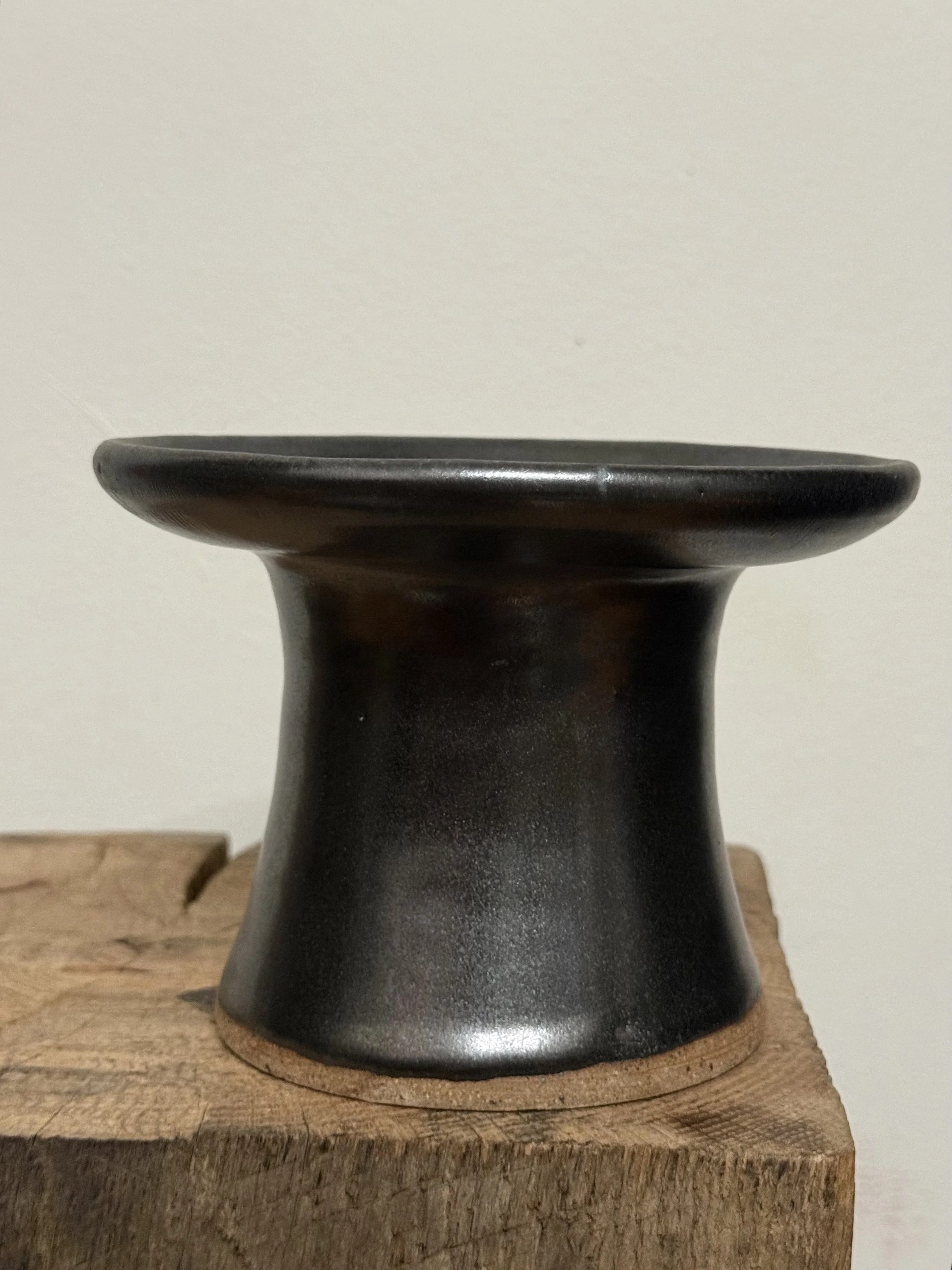
A sculptural, anvil-like form with a wide, flared rim tapering down into a narrow waist before flaring again at the base — a strong architectural silhouette built more on shape than surface decoration. Finished in a uniform matte black glaze with a soft satin sheen, letting the thrown profile carry the piece rather than glaze effects. A thin ring of exposed clay shows at the foot, grounding an otherwise sleek, monochrome form.
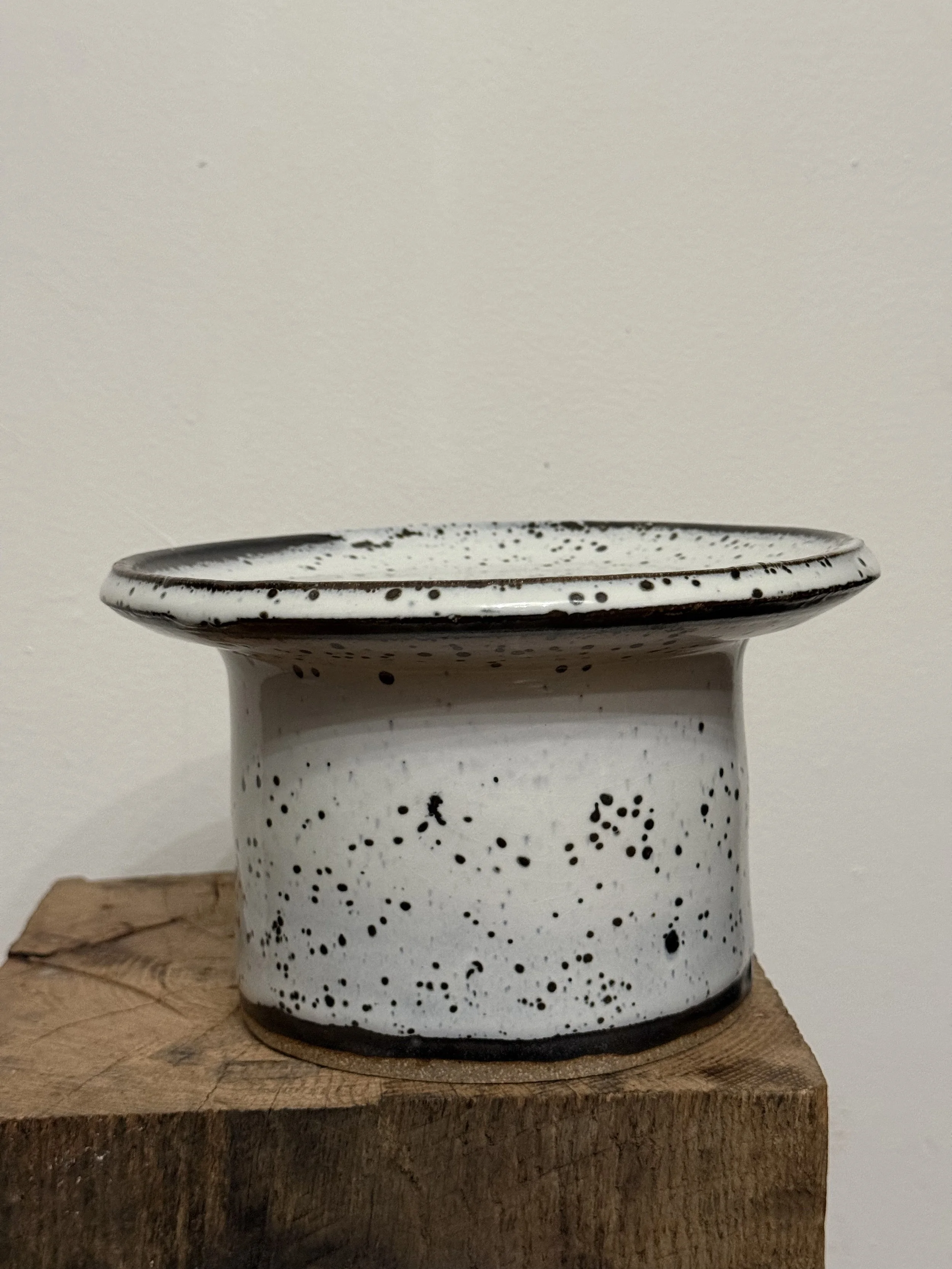
Same wide-rimmed, pedestal silhouette as the previous piece, glazed in bright white with fine black speckling that scatters loosely at the rim and gathers denser toward the base. A dark manganese-brown line traces the rim edge and grounds the foot, bracketing the form top and bottom. The broad flared lip and tall footed body give it strong presence as a display or riser piece.
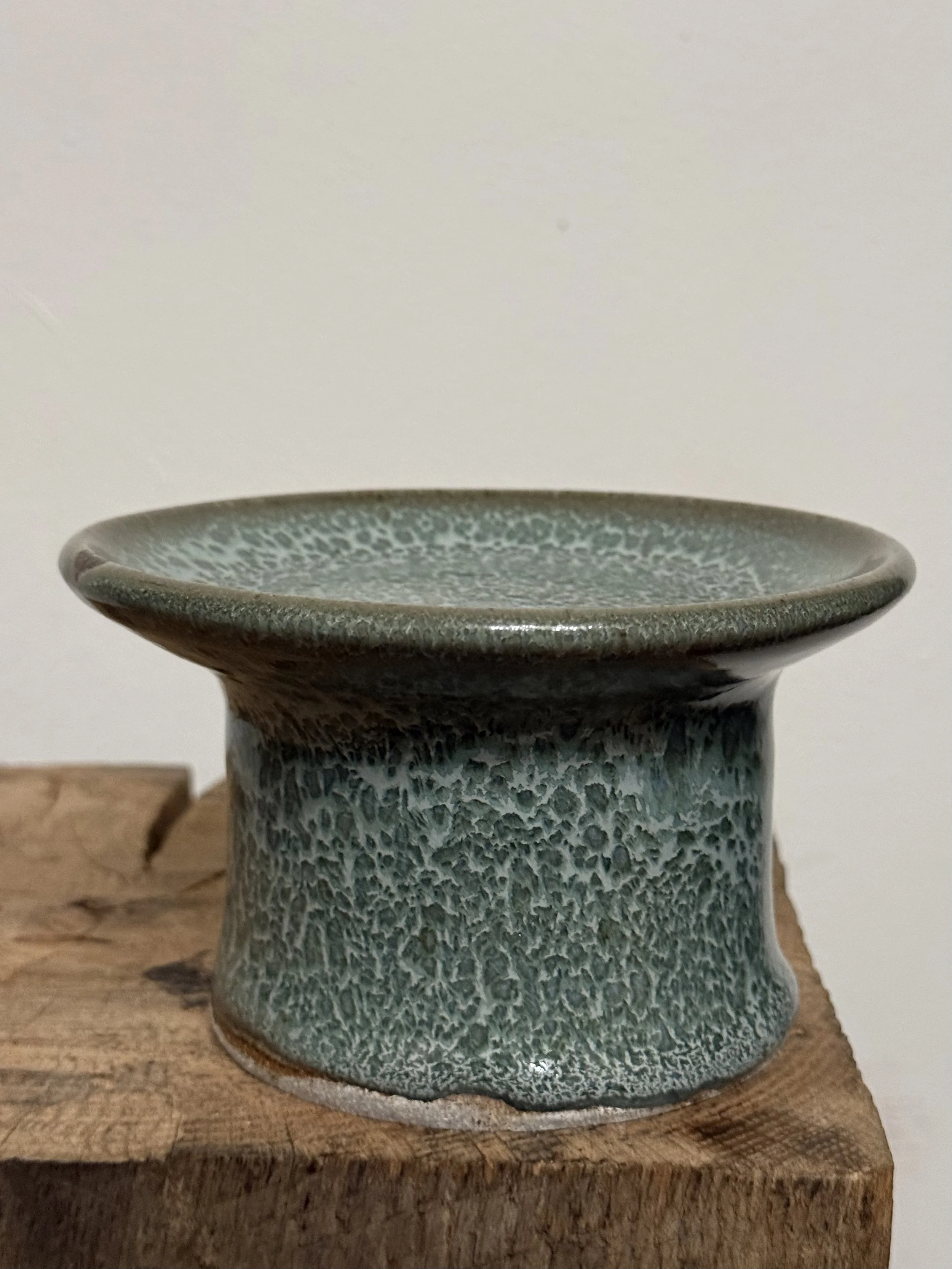
Variation on the flared-rim pedestal form, glazed in a mottled slate-green crystalline surface that pools smooth and reflective across the rim before breaking into a dense, pitted texture down the body — closer to a lichen or weathered stone finish than the glassier interior. The unglazed foot shows a pale stoneware body, with a thin run of glaze pooling unevenly along the base edge.
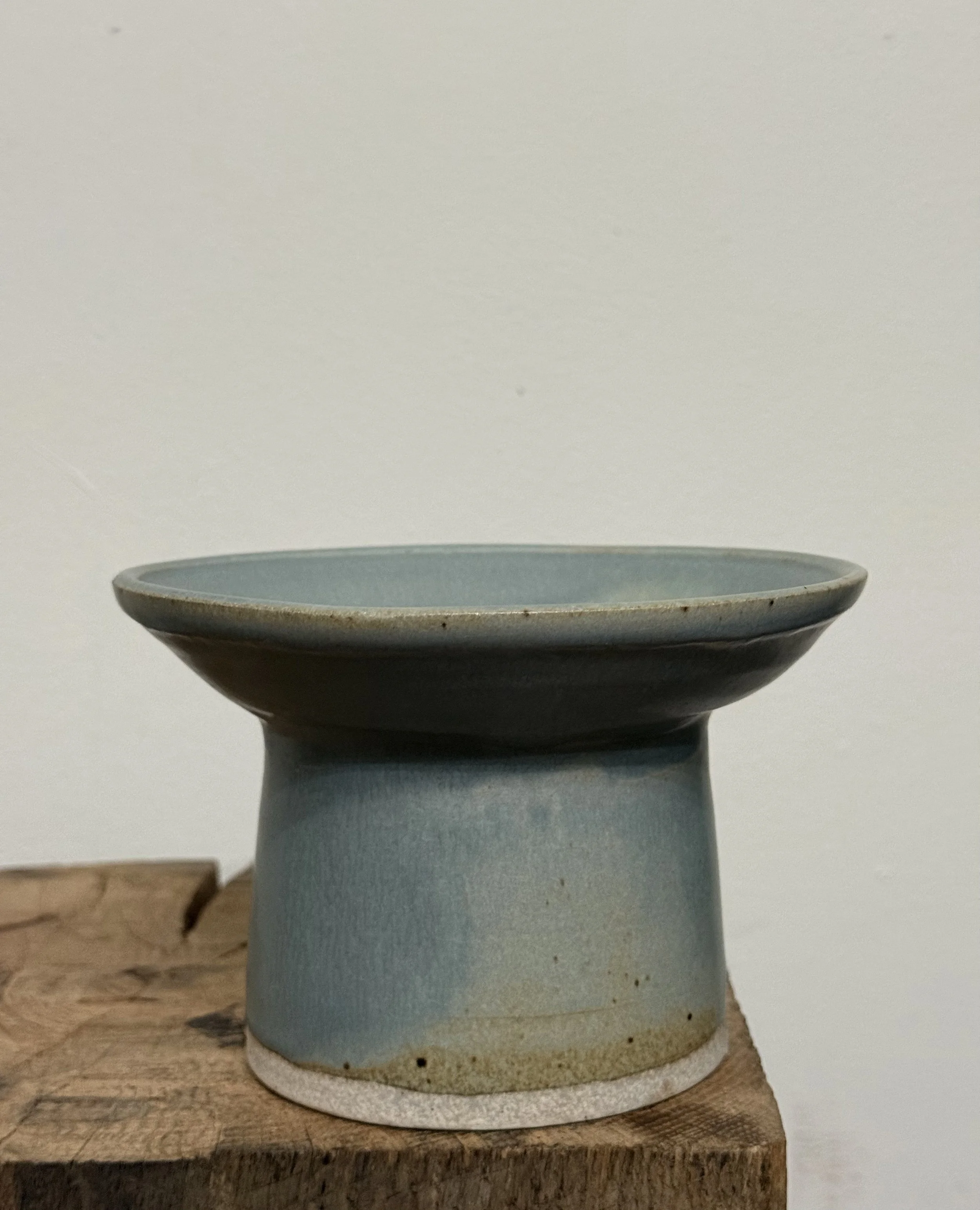
Pedestal silhouette rendered in a smooth, satin powder-blue glaze that shifts subtly toward warmer olive tones near the base, with scattered dark iron speckling breaking through. A raw, unglazed foot in pale stoneware anchors the piece, and the flat interior of the wide rim carries a slightly deeper, more saturated tone than the exterior — a calm, restrained finish compared to the more textured pieces in this series.
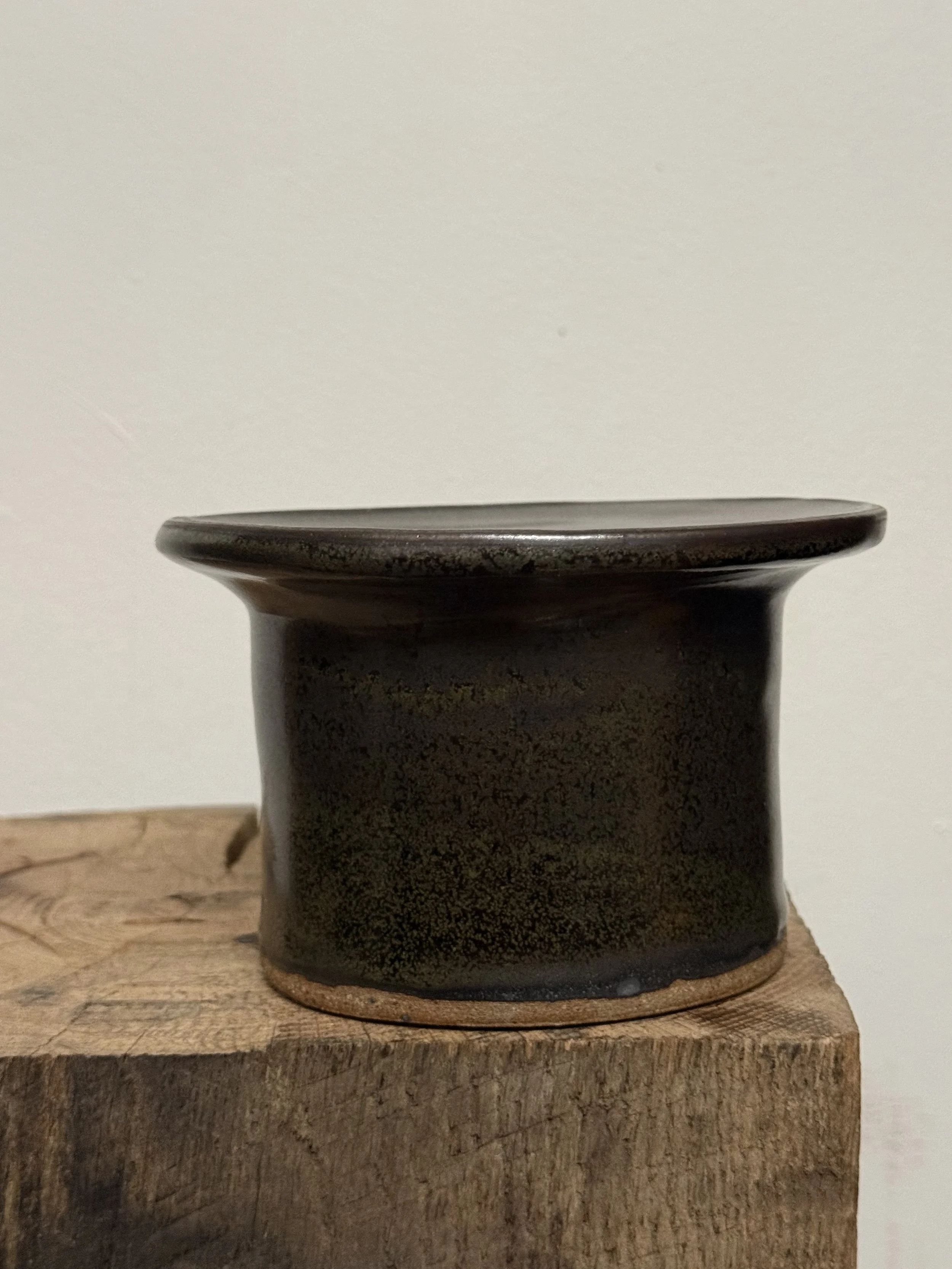
Pedestal form glazed in a dark, mottled bronze-brown with fine gold-flecked speckling breaking through where the glaze thins — closer in feel to oxidized metal than to ceramic. A narrow, unglazed foot ring in warm tan stoneware sits beneath, and the interior of the rim carries the same deep tone in a flatter, more matte finish. The darkest and most metallic-looking of the pedestal series so far.
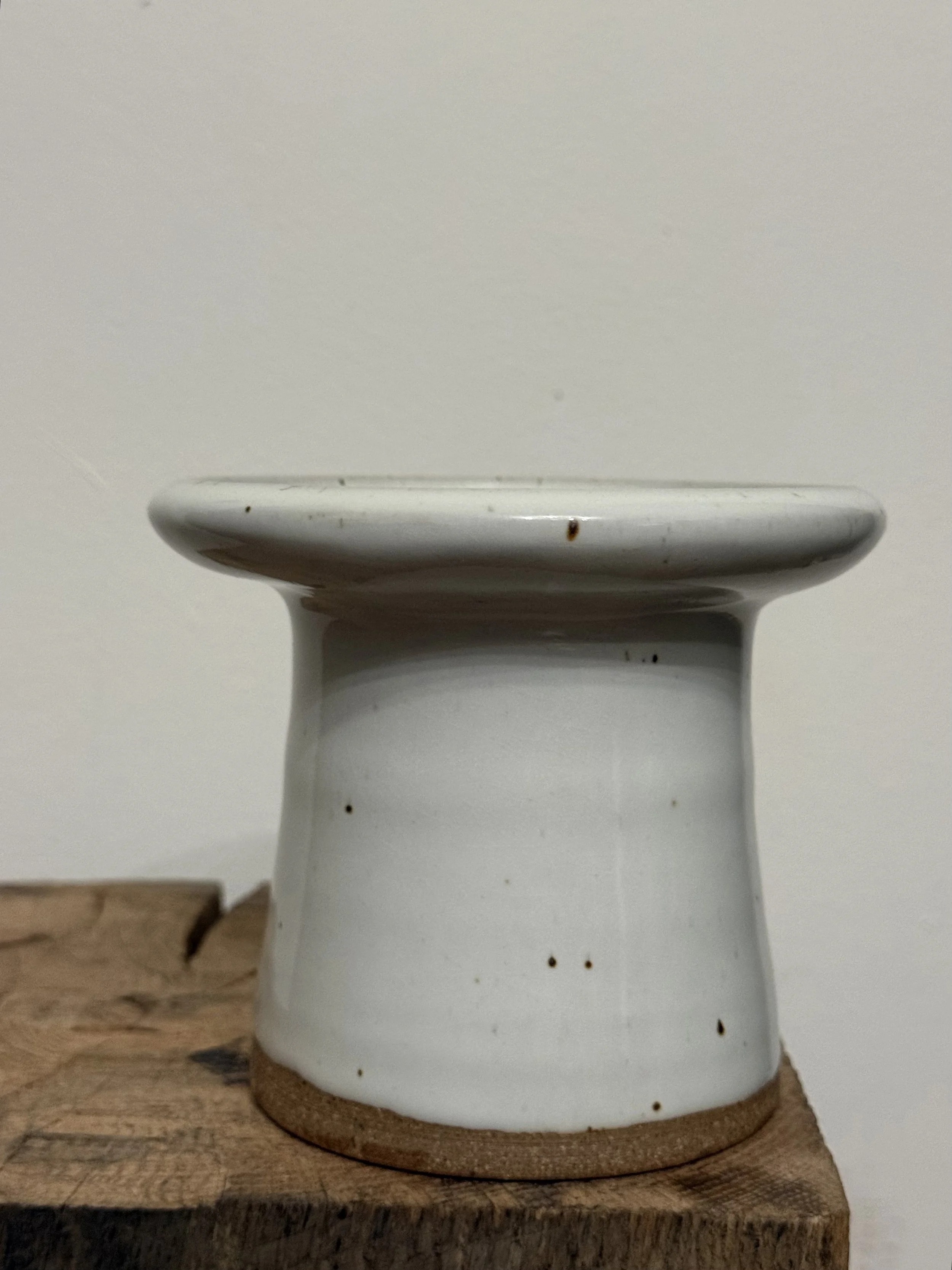
Glossy white with only sparse iron speckling scattered across the surface. The pared-back finish lets the thrown form itself take center stage — the taper of the base, the flare of the rim, and the crisp foot ring left in warm, bare stoneware. A quiet counterpoint to the darker, more heavily textured pieces in the group.
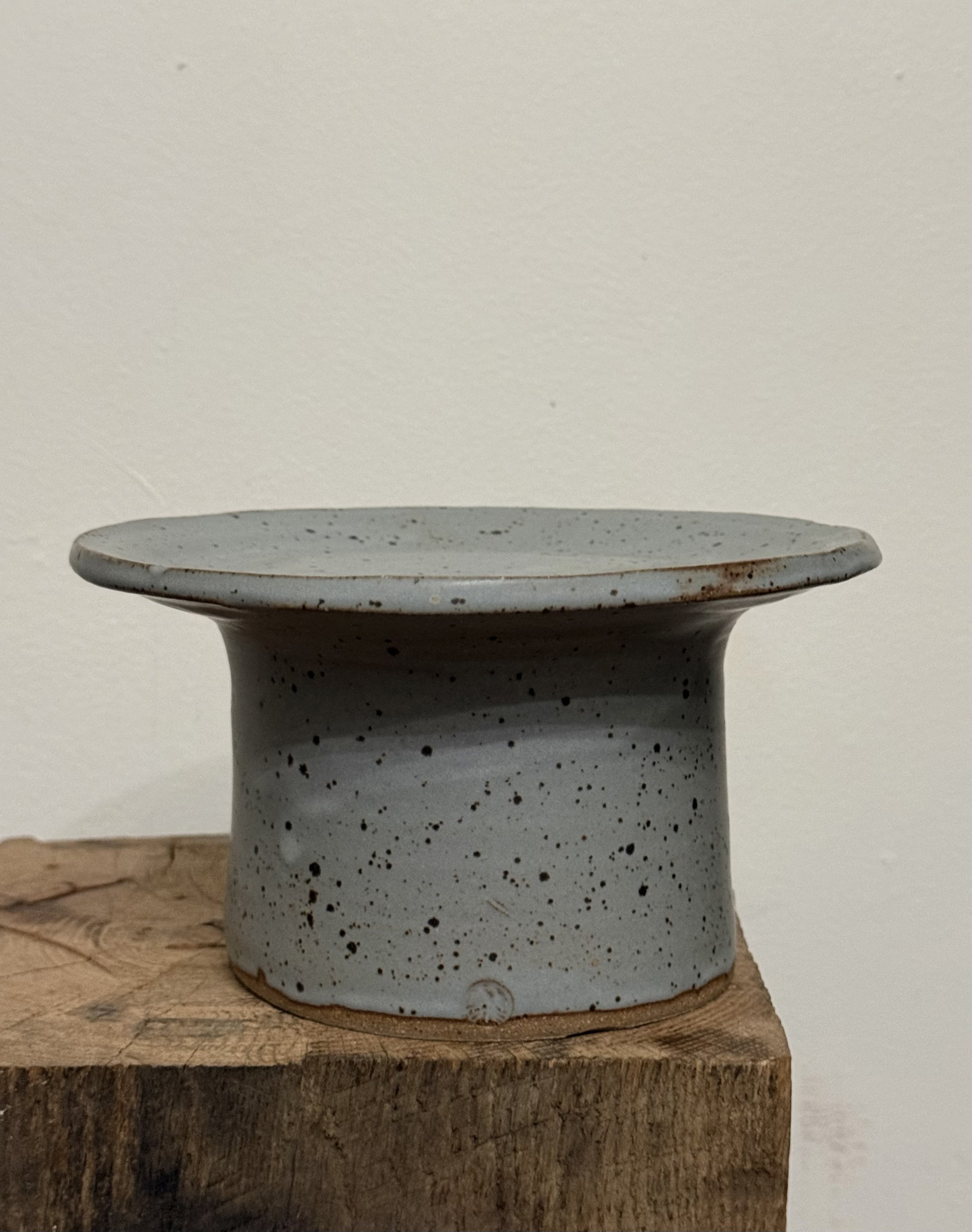
Soft dove-grey glaze finely speckled with dark iron flecks that scatter evenly across the body and rim. A thin rust-brown line traces the outer edge of the lip, and the raw stoneware foot peeks through at the base. Understated and cohesive with the rest of the series, sitting tonally between the bright white and the deeper slate-toned variants.
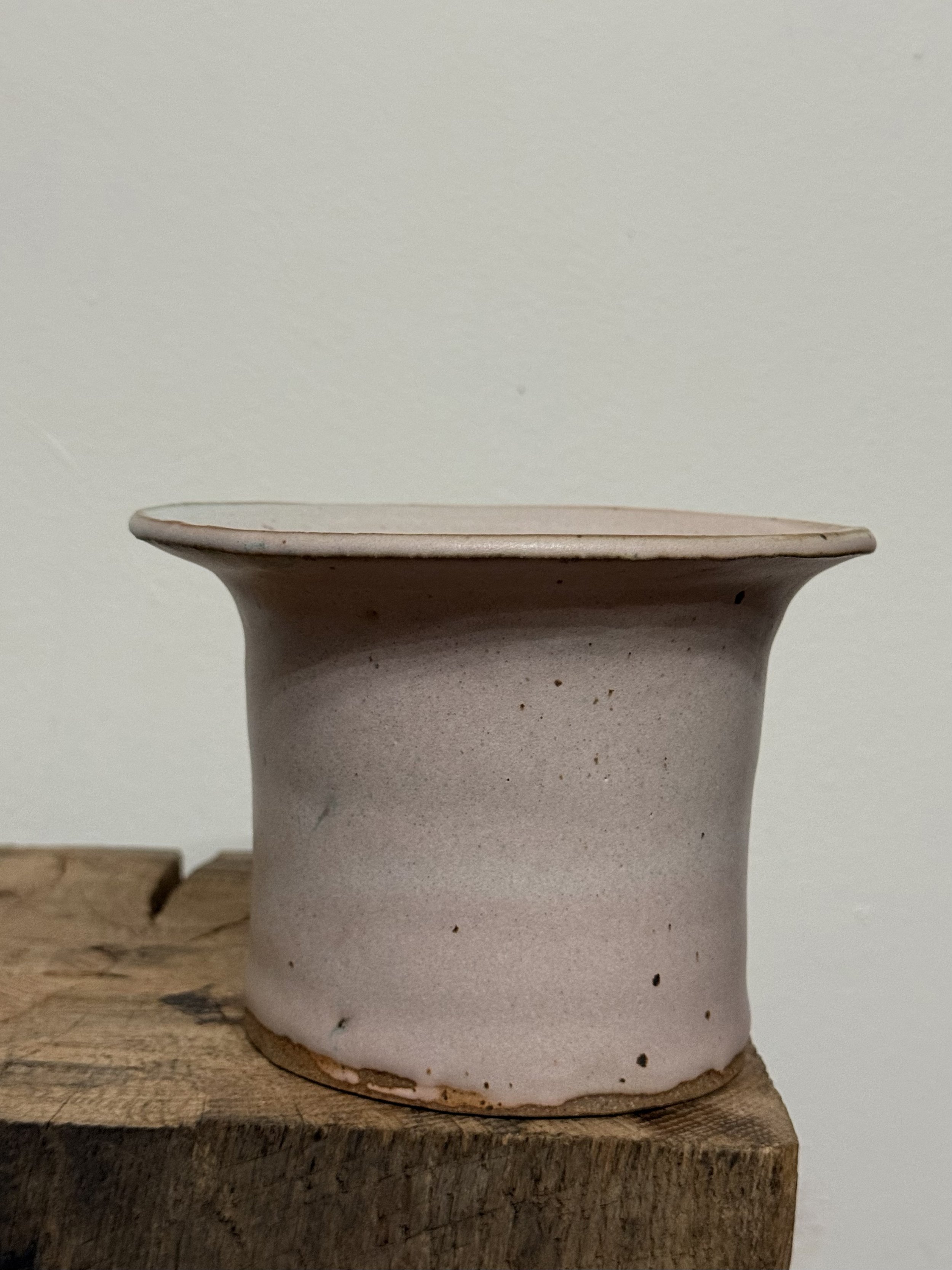
A soft, warm blush-toned variant of the pedestal form, glazed in a smooth satin finish with only scattered dark iron specks breaking the surface. The glaze thins unevenly at the base, revealing warm tan stoneware in patches rather than a clean foot line.
Featured Products
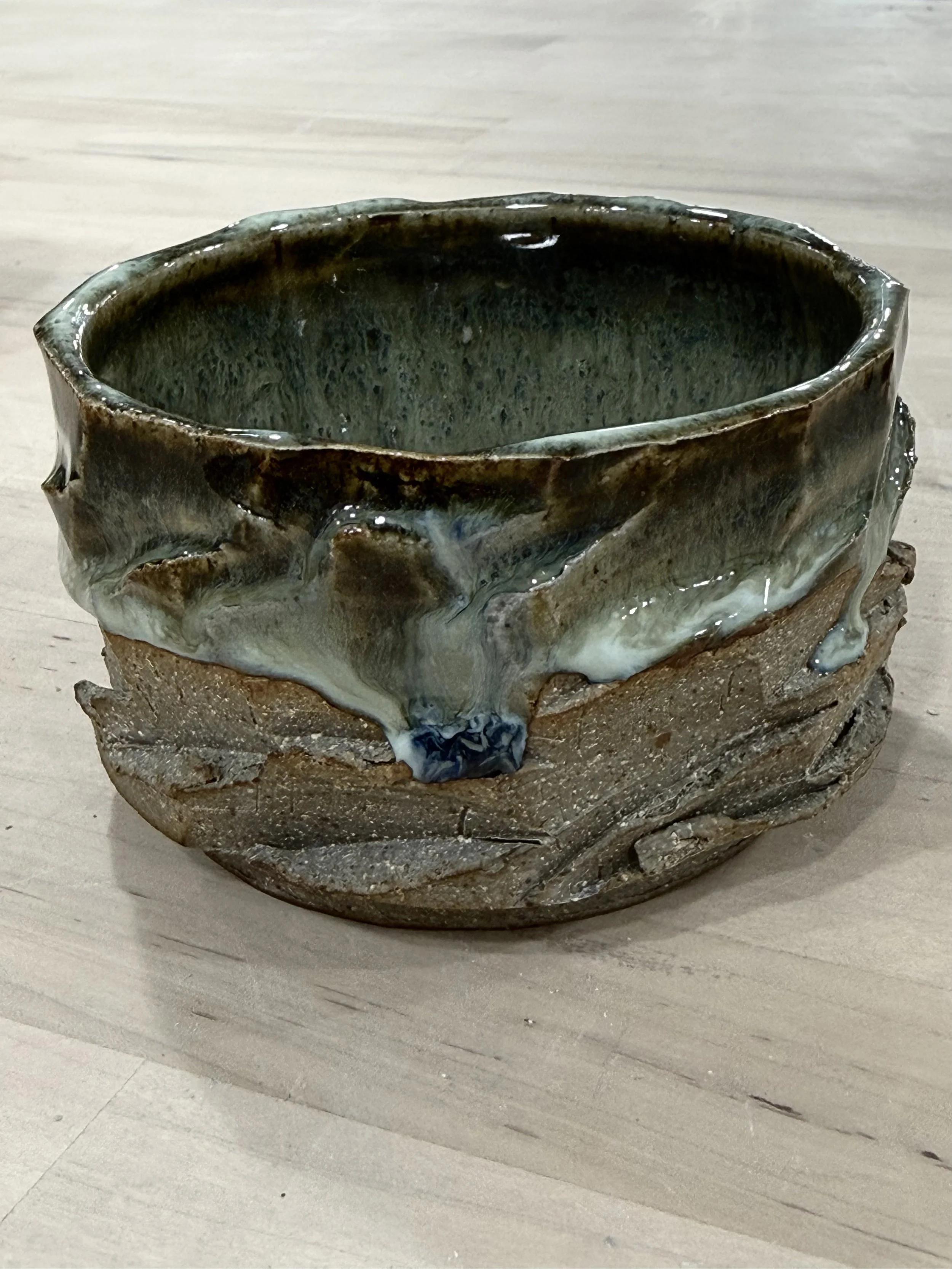
A carved, faceted stoneware bowl finished in a deep iron-brown glaze left bare on the lower body to expose a textured. A pale ash-toned glaze pools thick at the rim and runs down in long, individual drips that stop cleanly at the facet edges, each ending in a rounded bead — a controlled drip effect that owes as much to gravity as to timing in the firing. The interior shows a softer, more even break, pooling into a dark, moss-like cluster at the center where glaze thickness concentrates, consistent with your cone 10 reduction results.
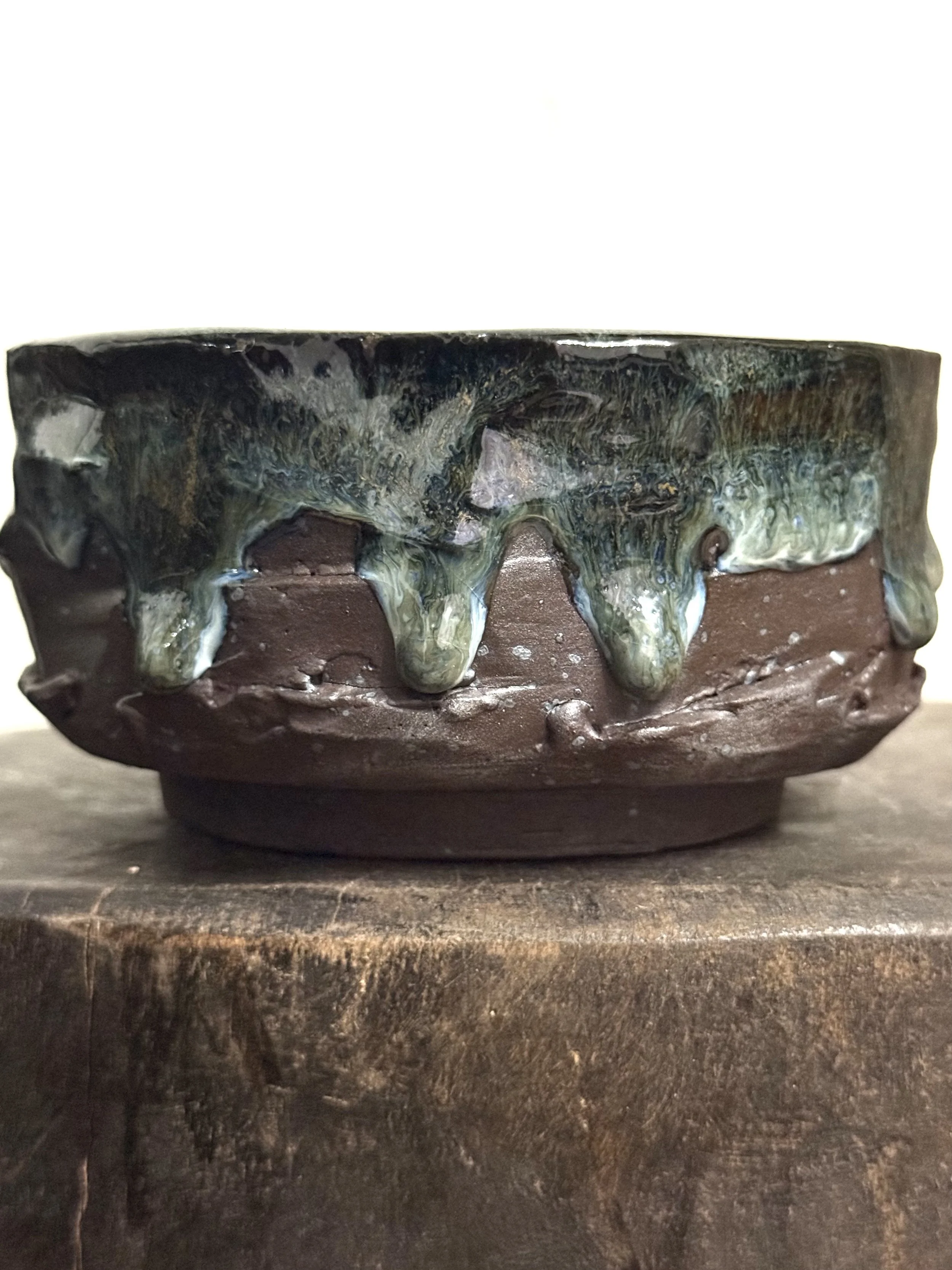
A carved, faceted stoneware bowl finished in a deep iron-brown glaze left bare on the lower body to expose a textured. A pale ash-toned glaze pools thick at the rim and runs down in long, individual drips that stop cleanly at the facet edges, each ending in a rounded bead — a controlled drip effect that owes as much to gravity as to timing in the firing. The interior shows a softer, more even break, pooling into a dark, moss-like cluster at the center where glaze thickness concentrates, consistent with your cone 10 reduction results.
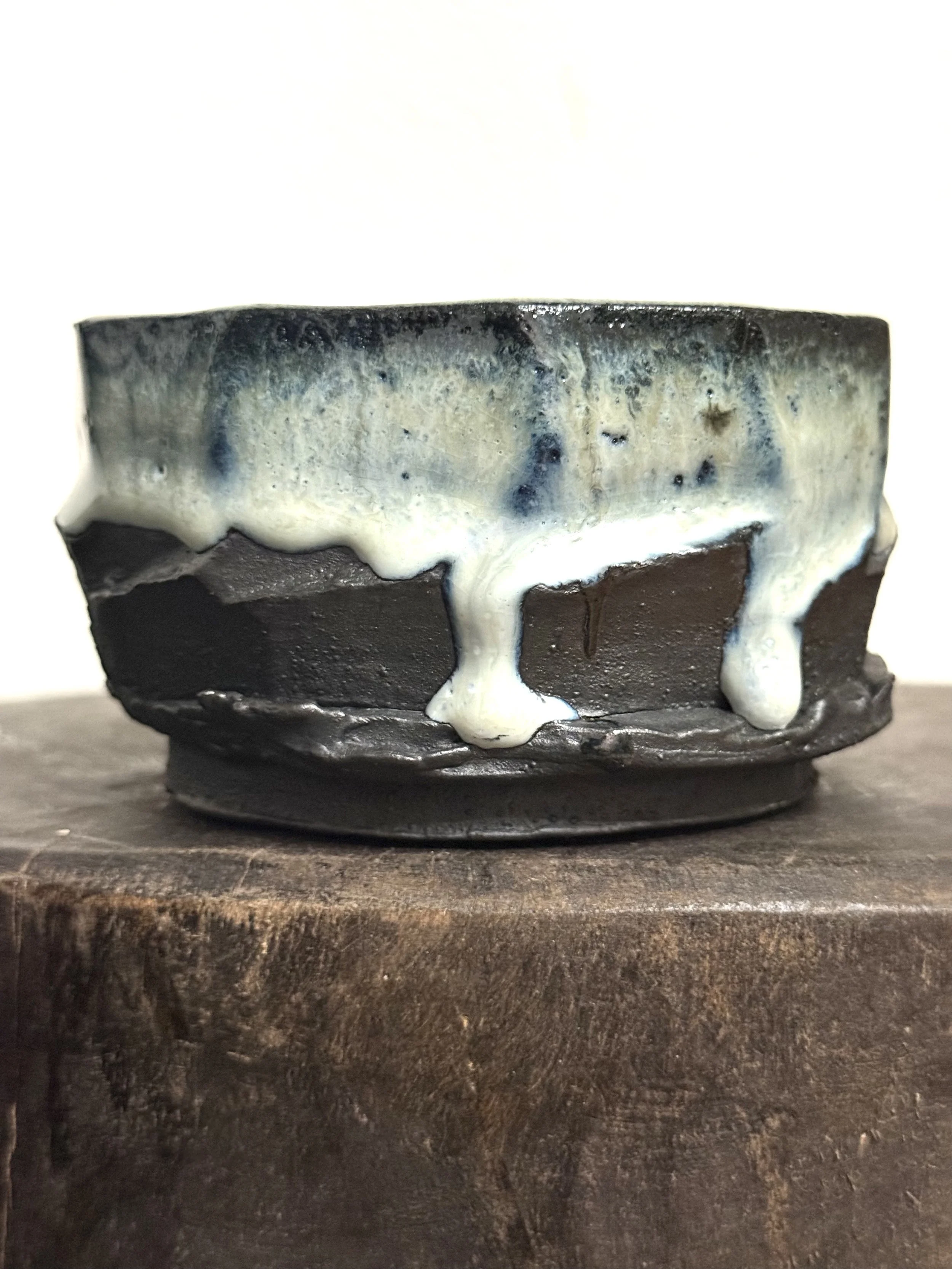
A carved, faceted stoneware bowl finished in a deep iron-brown glaze left bare on the lower body to expose a textured. A pale ash-toned glaze pools thick at the rim and runs down in long, individual drips that stop cleanly at the facet edges, each ending in a rounded bead — a controlled drip effect that owes as much to gravity as to timing in the firing. The interior shows a softer, more even break, pooling into a dark, moss-like cluster at the center where glaze thickness concentrates, consistent with your cone 10 reduction results.
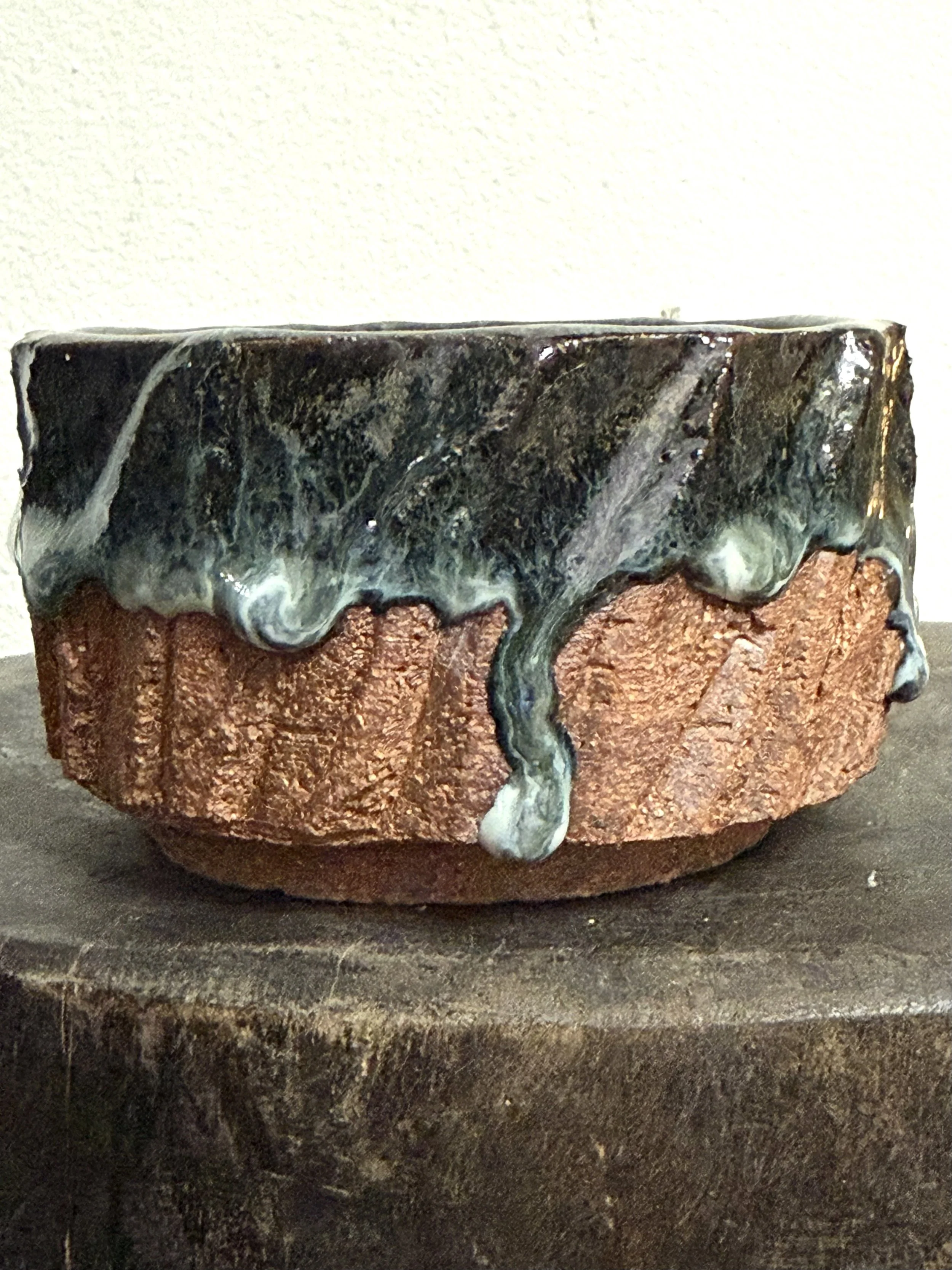
A carved, faceted stoneware bowl finished in a deep iron-brown glaze left bare on the lower body to expose a textured. A pale ash-toned glaze pools thick at the rim and runs down in long, individual drips that stop cleanly at the facet edges, each ending in a rounded bead — a controlled drip effect that owes as much to gravity as to timing in the firing. The interior shows a softer, more even break, pooling into a dark, moss-like cluster at the center where glaze thickness concentrates, consistent with your cone 10 reduction results.
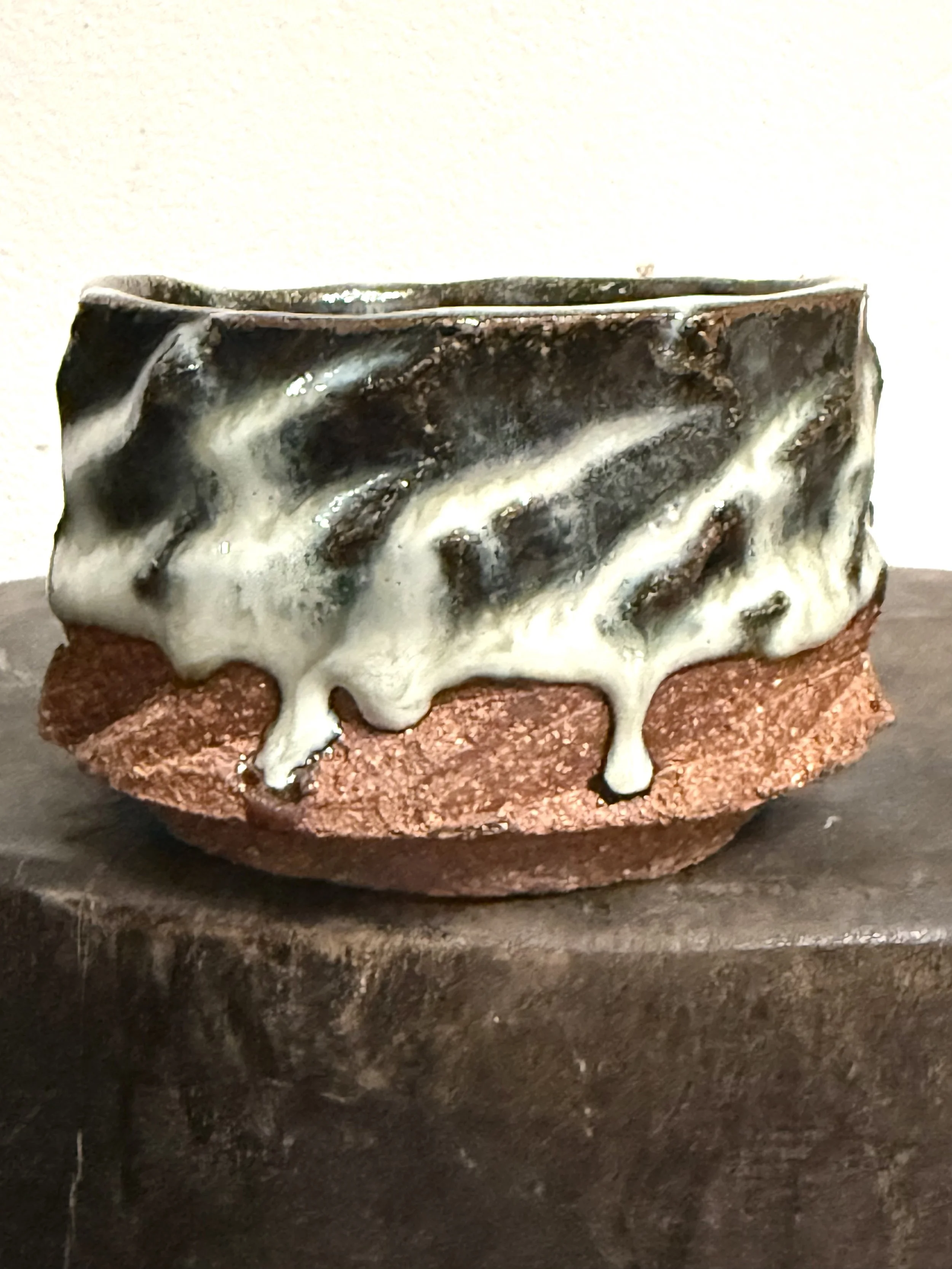
A carved, faceted stoneware bowl finished in a deep iron-brown glaze left bare on the lower body to expose a textured. A pale ash-toned glaze pools thick at the rim and runs down in long, individual drips that stop cleanly at the facet edges, each ending in a rounded bead — a controlled drip effect that owes as much to gravity as to timing in the firing. The interior shows a softer, more even break, pooling into a dark, moss-like cluster at the center where glaze thickness concentrates, consistent with your cone 10 reduction results.
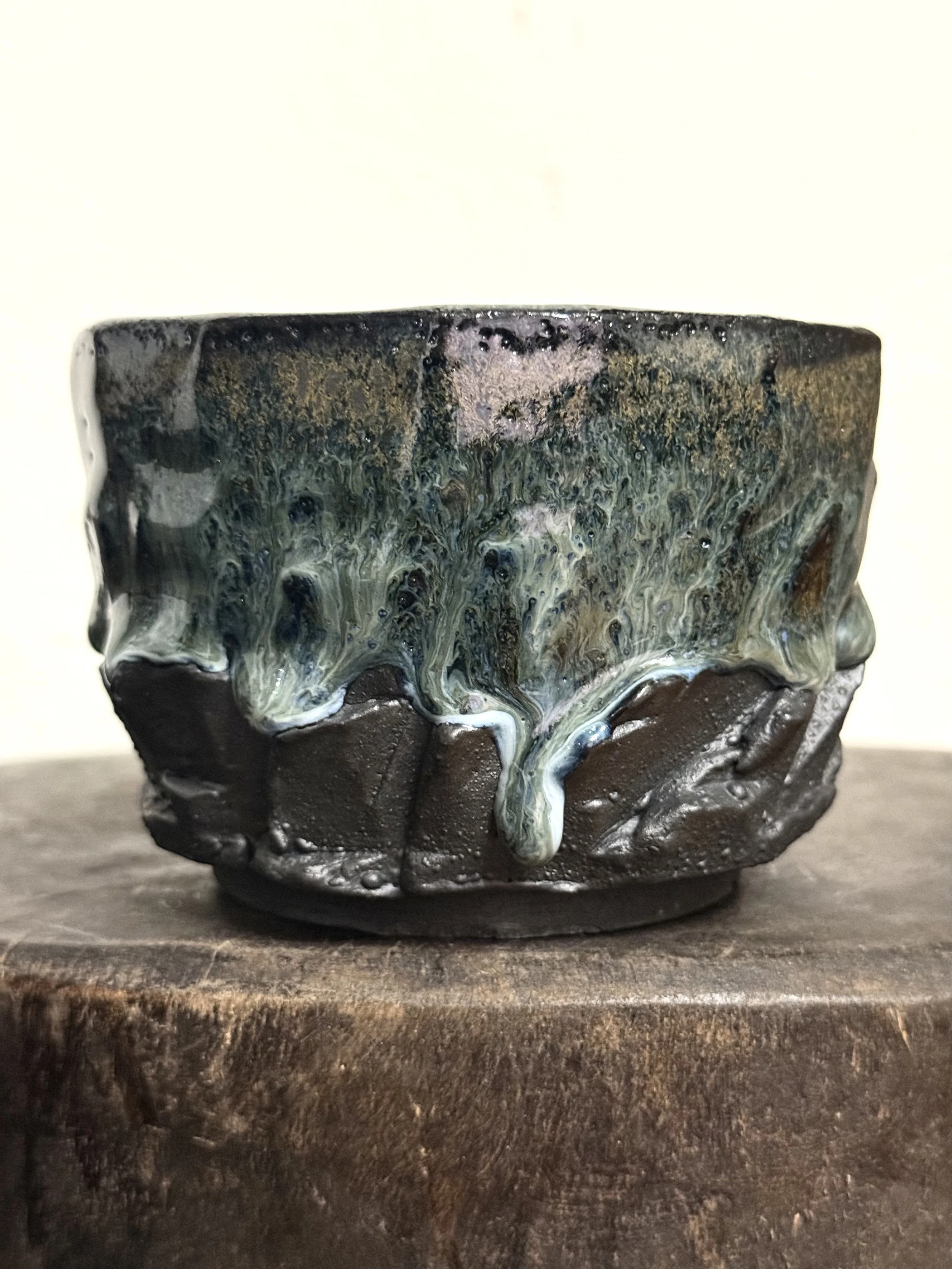
A carved, faceted stoneware bowl finished in a deep iron-brown glaze left bare on the lower body to expose a textured. A pale ash-toned glaze pools thick at the rim and runs down in long, individual drips that stop cleanly at the facet edges, each ending in a rounded bead — a controlled drip effect that owes as much to gravity as to timing in the firing. The interior shows a softer, more even break, pooling into a dark, moss-like cluster at the center where glaze thickness concentrates, consistent with your cone 10 reduction results.
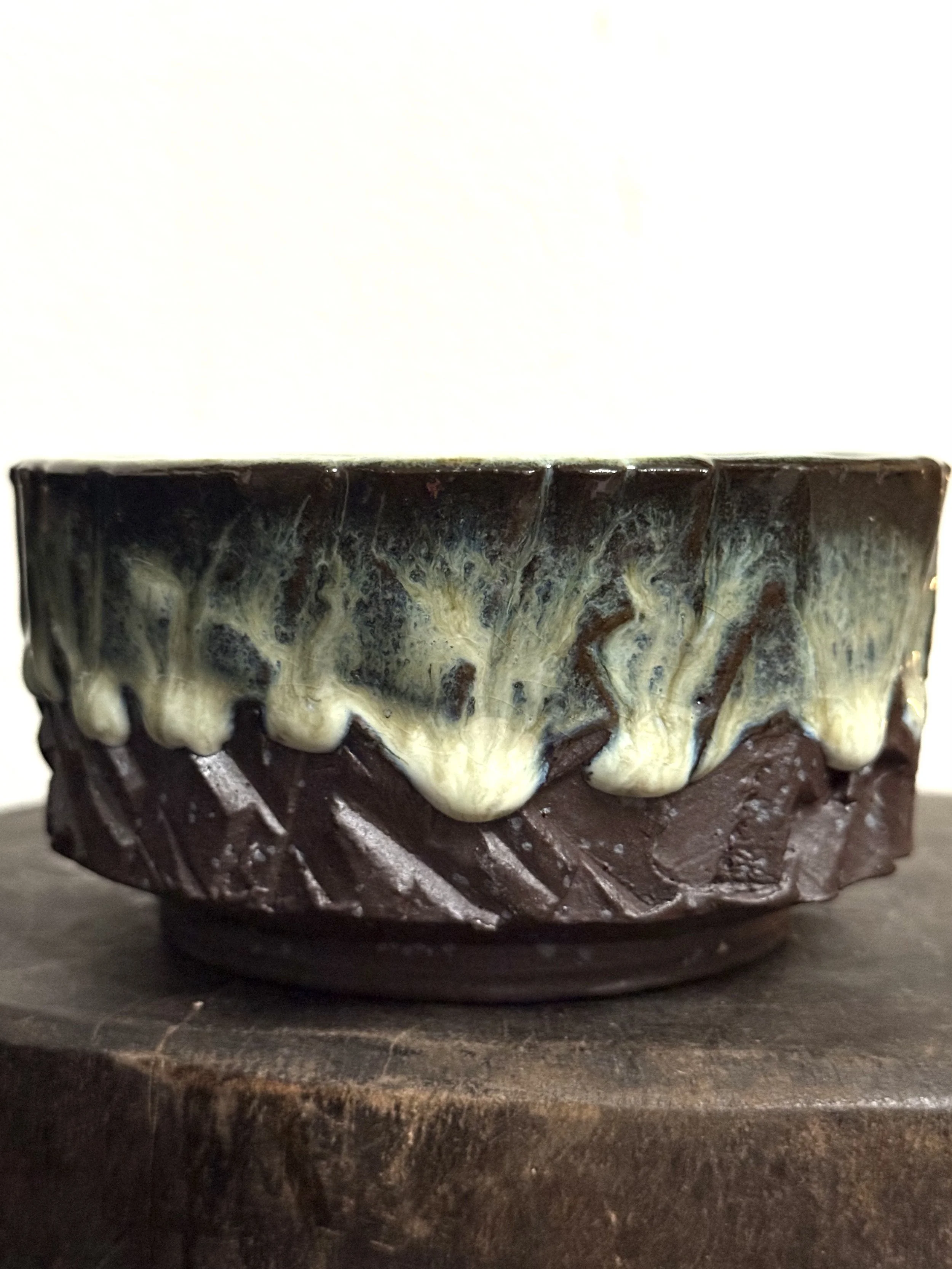
A carved, faceted stoneware bowl finished in a deep iron-brown glaze left bare on the lower body to expose a textured. A pale ash-toned glaze pools thick at the rim and runs down in long, individual drips that stop cleanly at the facet edges, each ending in a rounded bead — a controlled drip effect that owes as much to gravity as to timing in the firing. The interior shows a softer, more even break, pooling into a dark, moss-like cluster at the center where glaze thickness concentrates, consistent with your cone 10 reduction results.
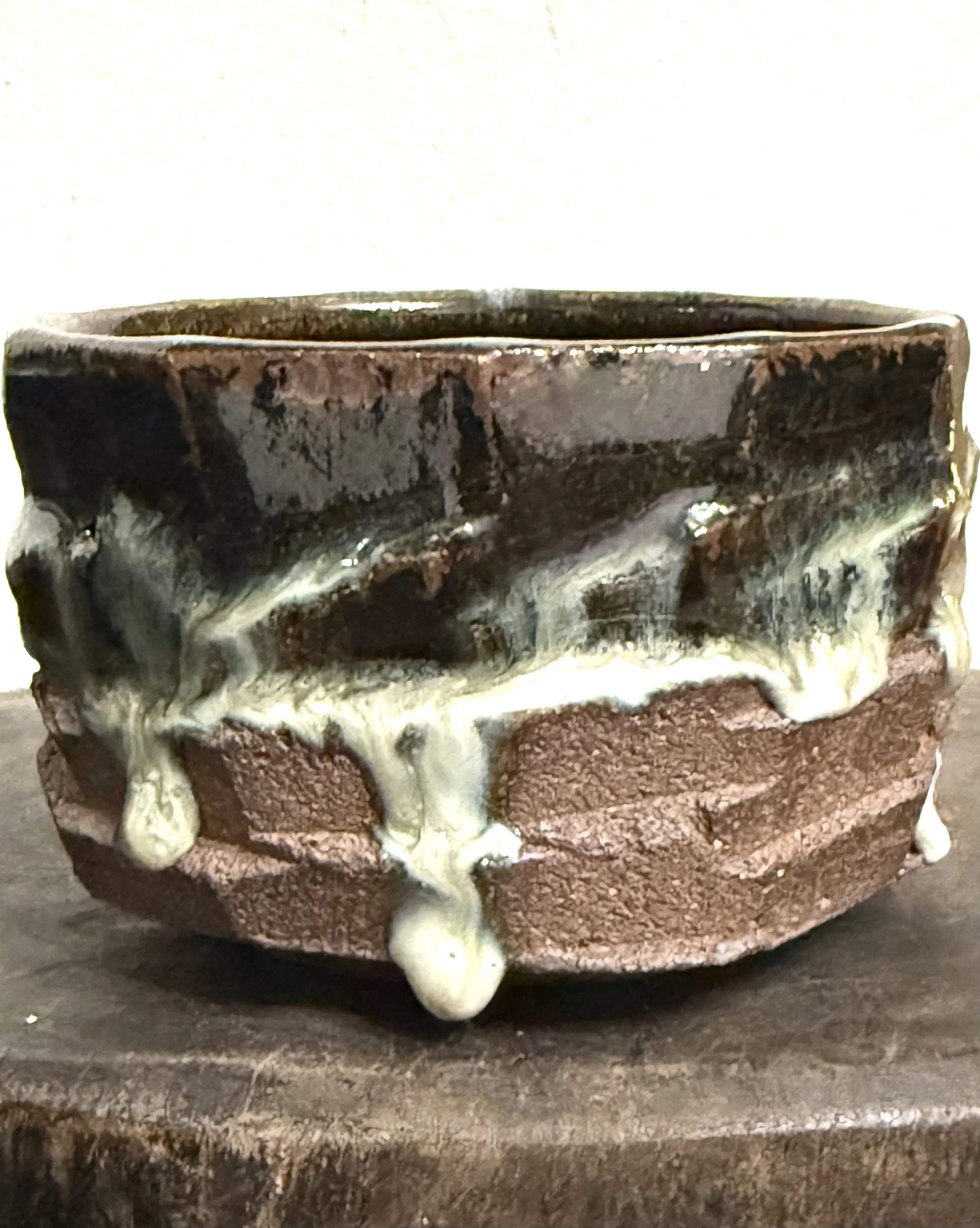
A carved, faceted stoneware bowl finished in a deep iron-brown glaze left bare on the lower body to expose a textured. A pale ash-toned glaze pools thick at the rim and runs down in long, individual drips that stop cleanly at the facet edges, each ending in a rounded bead — a controlled drip effect that owes as much to gravity as to timing in the firing. The interior shows a softer, more even break, pooling into a dark, moss-like cluster at the center where glaze thickness concentrates, consistent with your cone 10 reduction results.
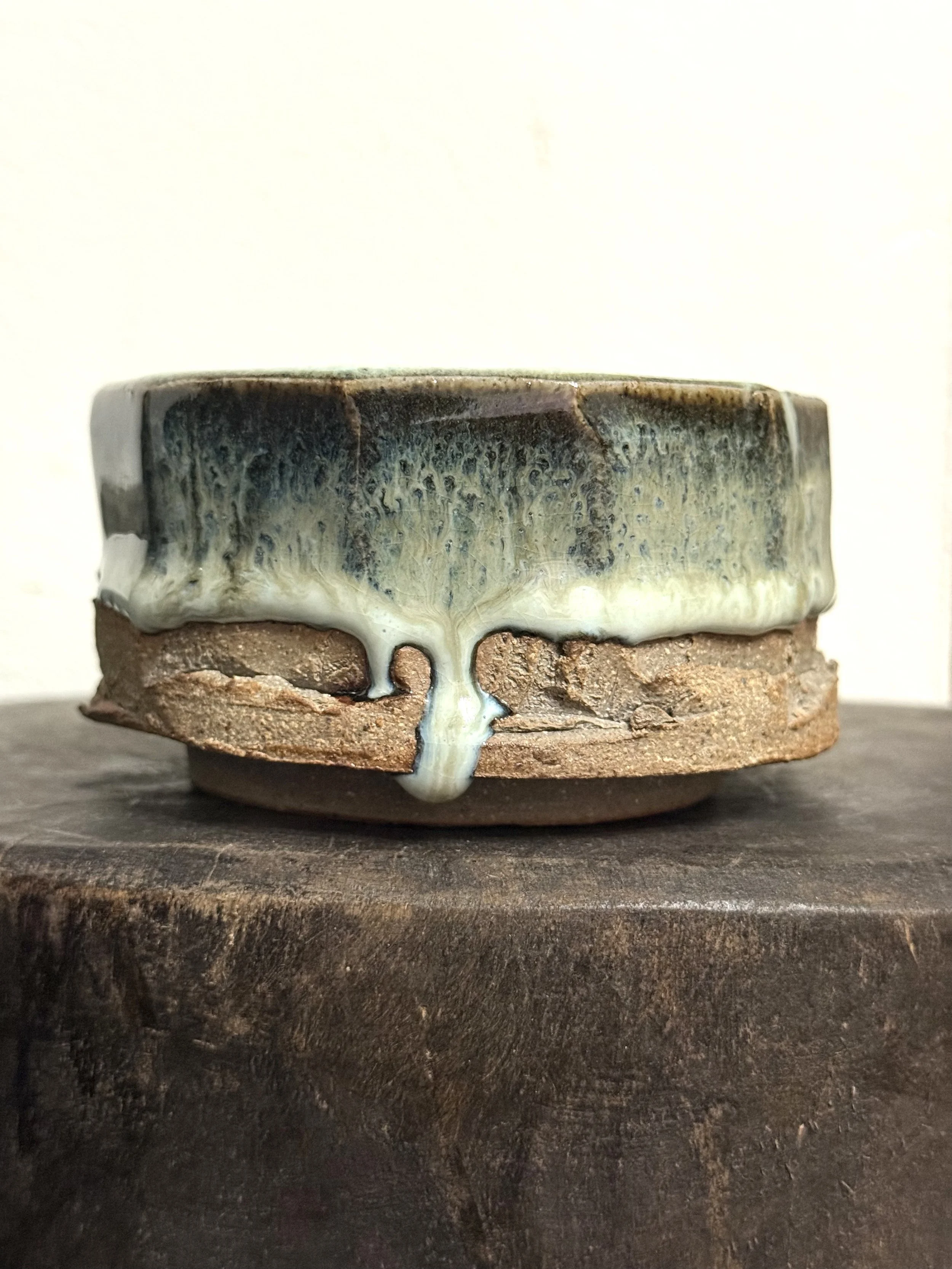
A carved, faceted stoneware bowl finished in a deep iron-brown glaze left bare on the lower body to expose a textured. A pale ash-toned glaze pools thick at the rim and runs down in long, individual drips that stop cleanly at the facet edges, each ending in a rounded bead — a controlled drip effect that owes as much to gravity as to timing in the firing. The interior shows a softer, more even break, pooling into a dark, moss-like cluster at the center where glaze thickness concentrates, consistent with your cone 10 reduction results.
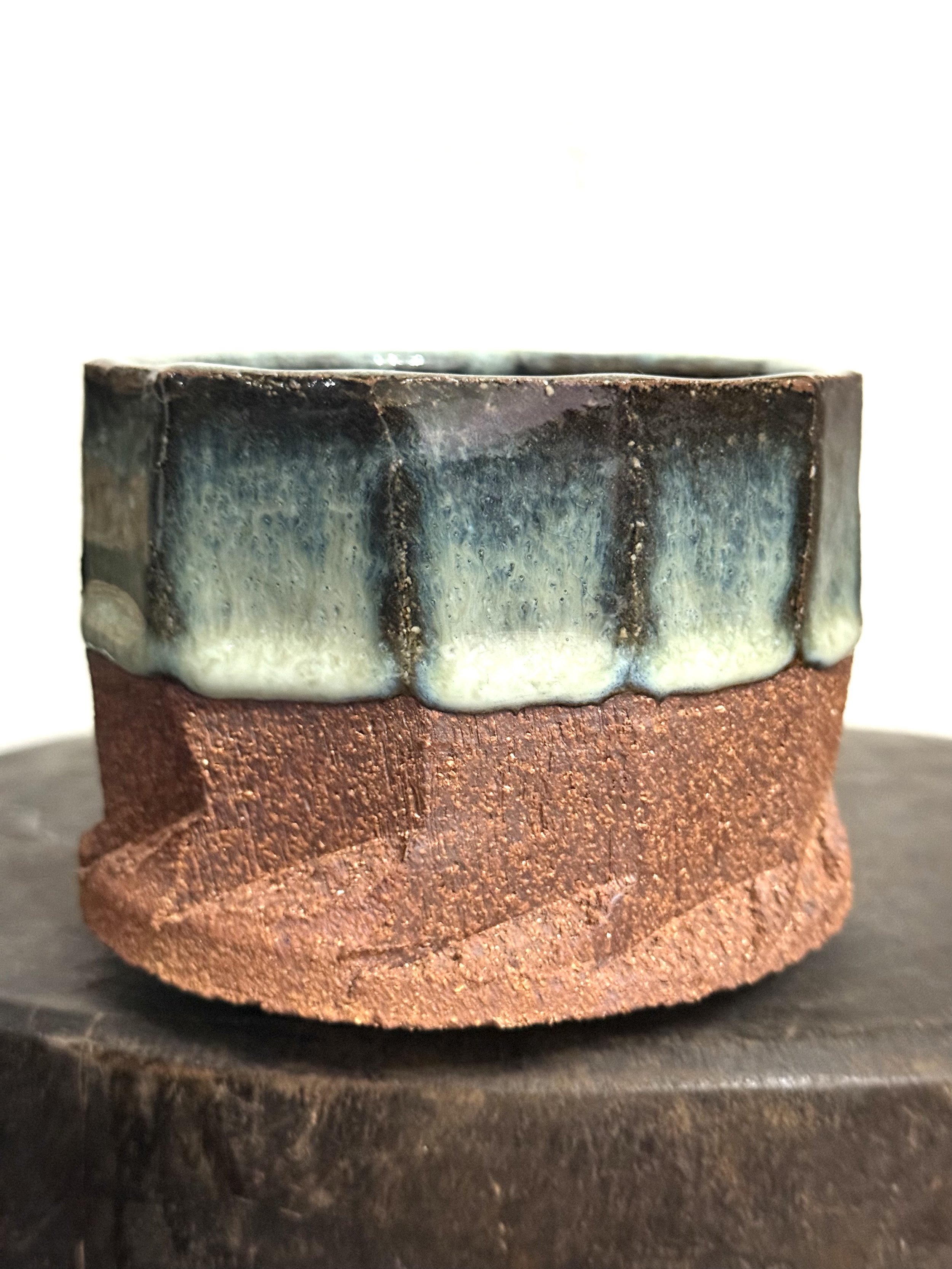
A carved, faceted stoneware bowl finished in a deep iron-brown glaze left bare on the lower body to expose a textured. A pale ash-toned glaze pools thick at the rim and runs down in long, individual drips that stop cleanly at the facet edges, each ending in a rounded bead — a controlled drip effect that owes as much to gravity as to timing in the firing. The interior shows a softer, more even break, pooling into a dark, moss-like cluster at the center where glaze thickness concentrates, consistent with your cone 10 reduction results.
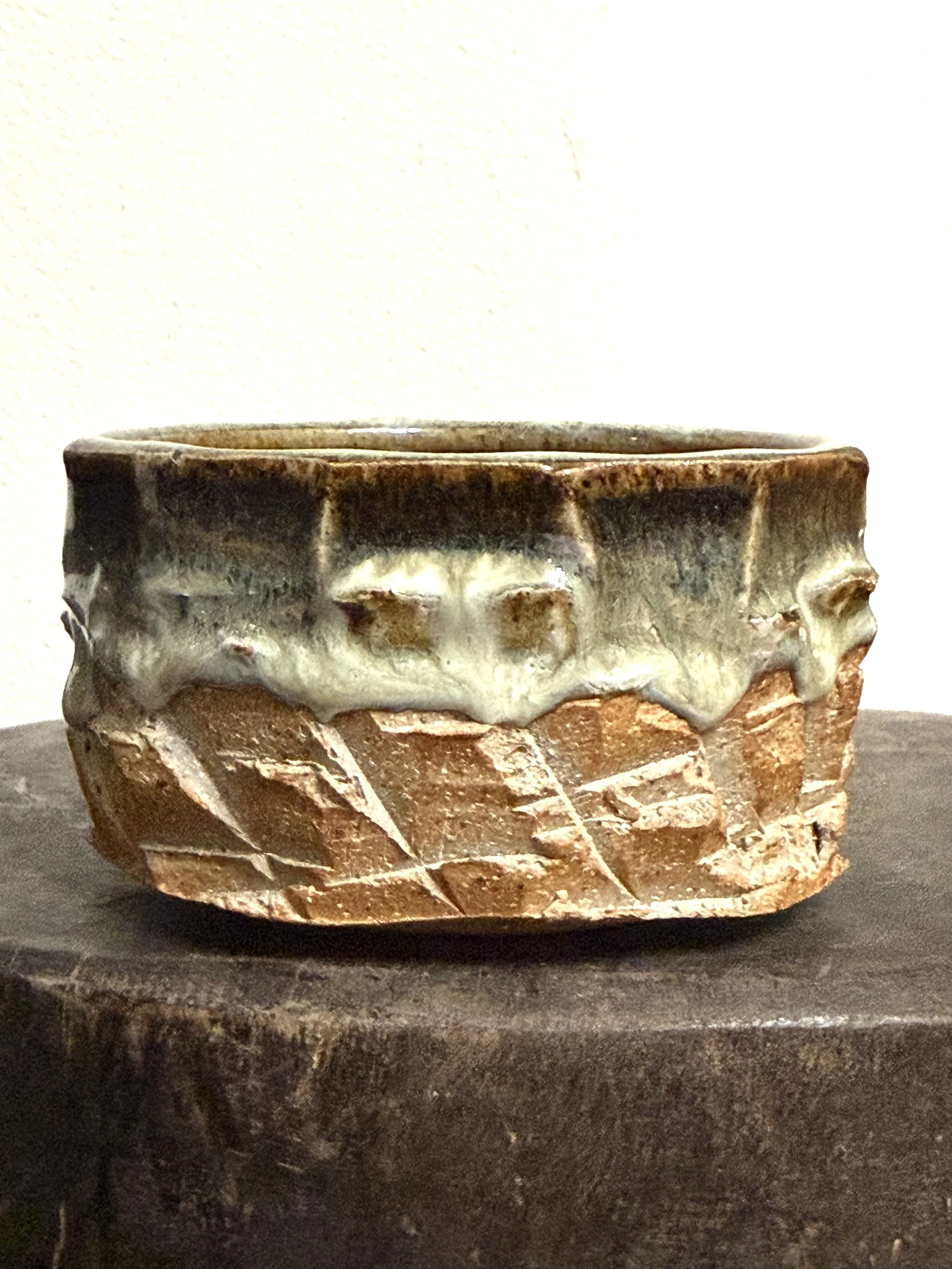
A carved, faceted stoneware bowl finished in a deep iron-brown glaze left bare on the lower body to expose a textured. A pale ash-toned glaze pools thick at the rim and runs down in long, individual drips that stop cleanly at the facet edges, each ending in a rounded bead — a controlled drip effect that owes as much to gravity as to timing in the firing. The interior shows a softer, more even break, pooling into a dark, moss-like cluster at the center where glaze thickness concentrates, consistent with your cone 10 reduction results.
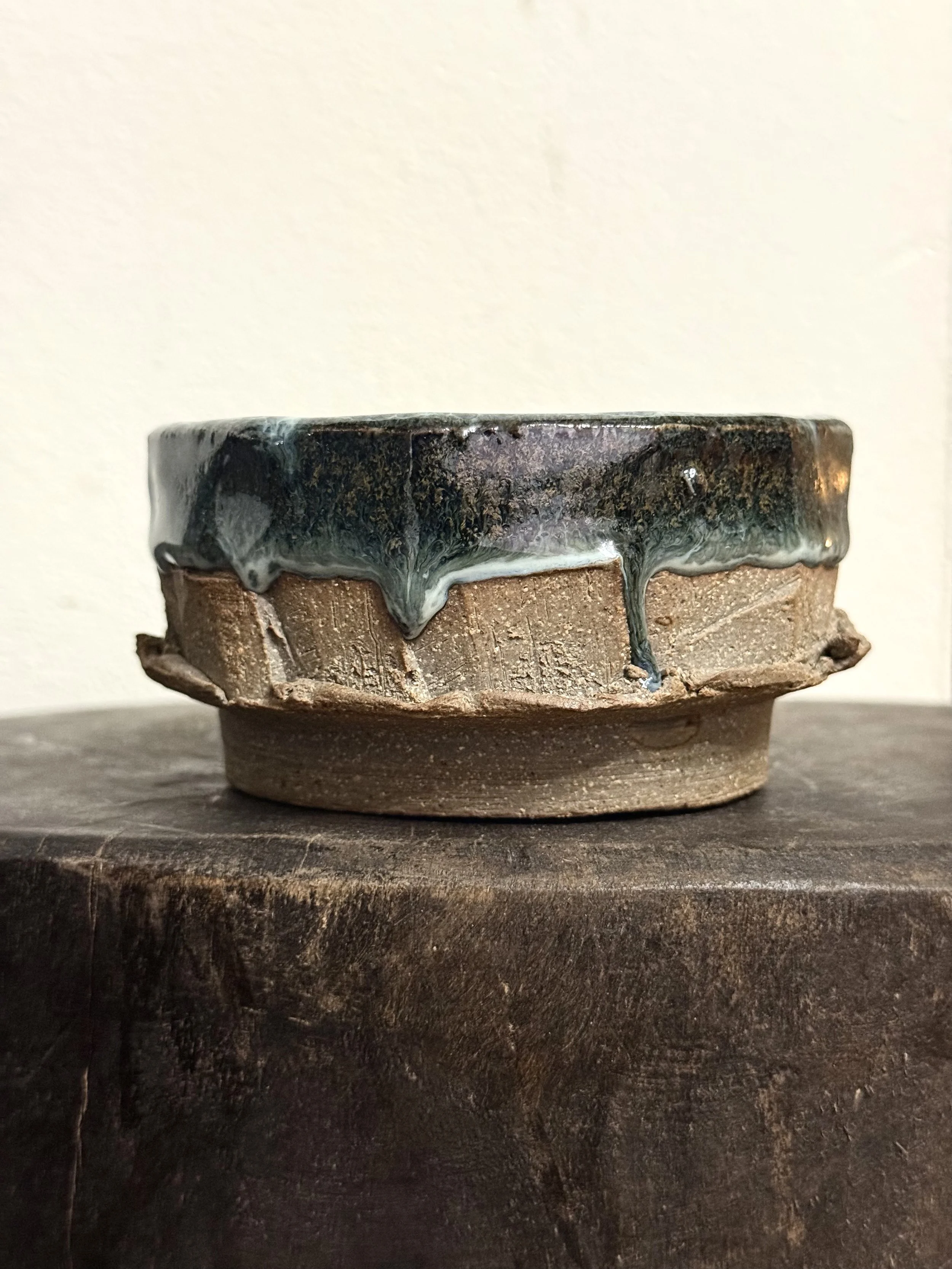
A carved, faceted stoneware bowl finished in a deep iron-brown glaze left bare on the lower body to expose a textured. A pale ash-toned glaze pools thick at the rim and runs down in long, individual drips that stop cleanly at the facet edges, each ending in a rounded bead — a controlled drip effect that owes as much to gravity as to timing in the firing. The interior shows a softer, more even break, pooling into a dark, moss-like cluster at the center where glaze thickness concentrates, consistent with your cone 10 reduction results.
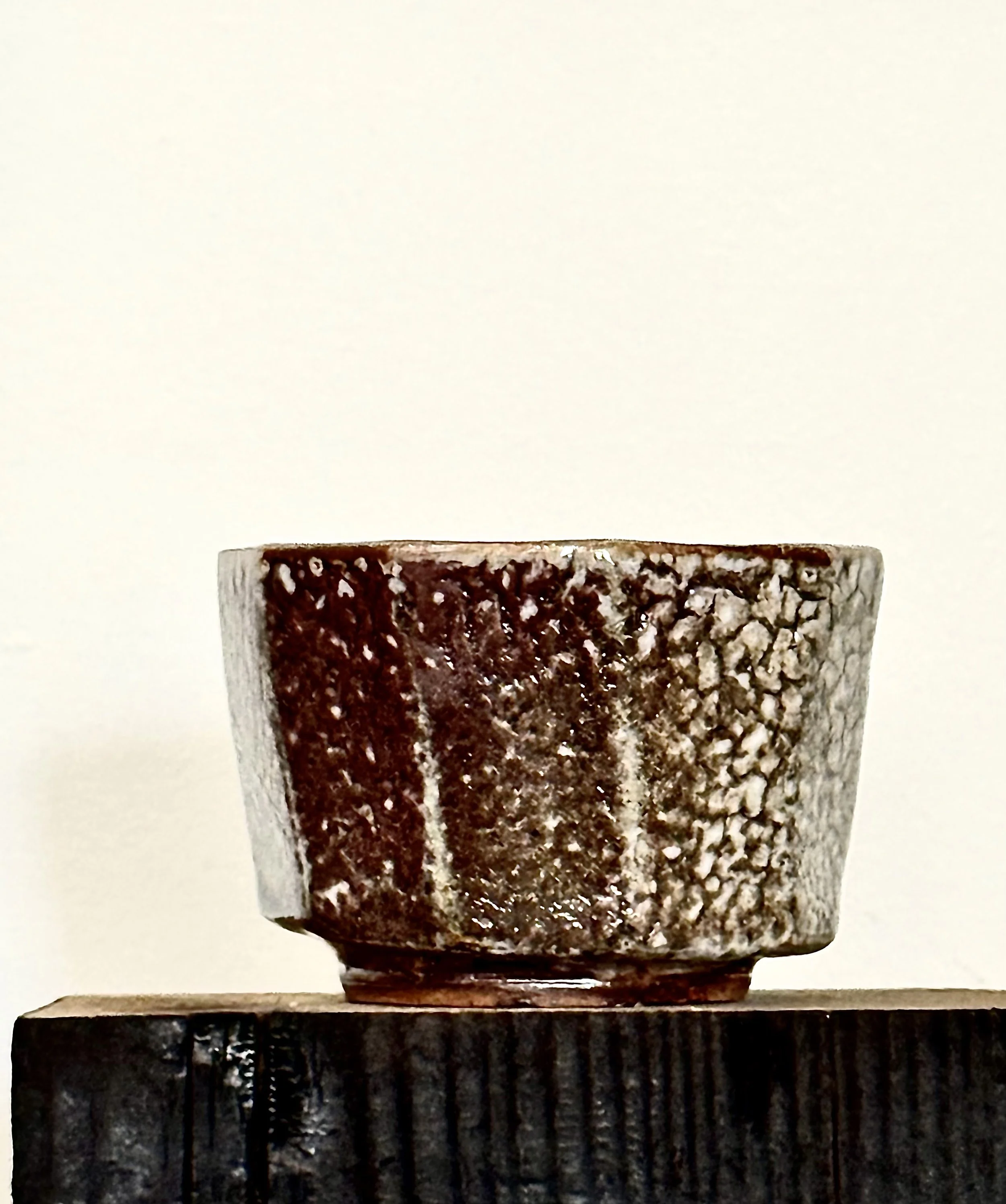
A faceted cup with a distinct vertical split down its surface — one half glazed in a rich, glossy oxblood-brown, the other in a heavily textured, crawling grey-white glaze with a dense, stony crackle. The two surfaces meet in a sharp seam rather than blending, giving the piece a two-sided character depending on the angle it's viewed from. A narrow, footed base in matching dark brown grounds the form.
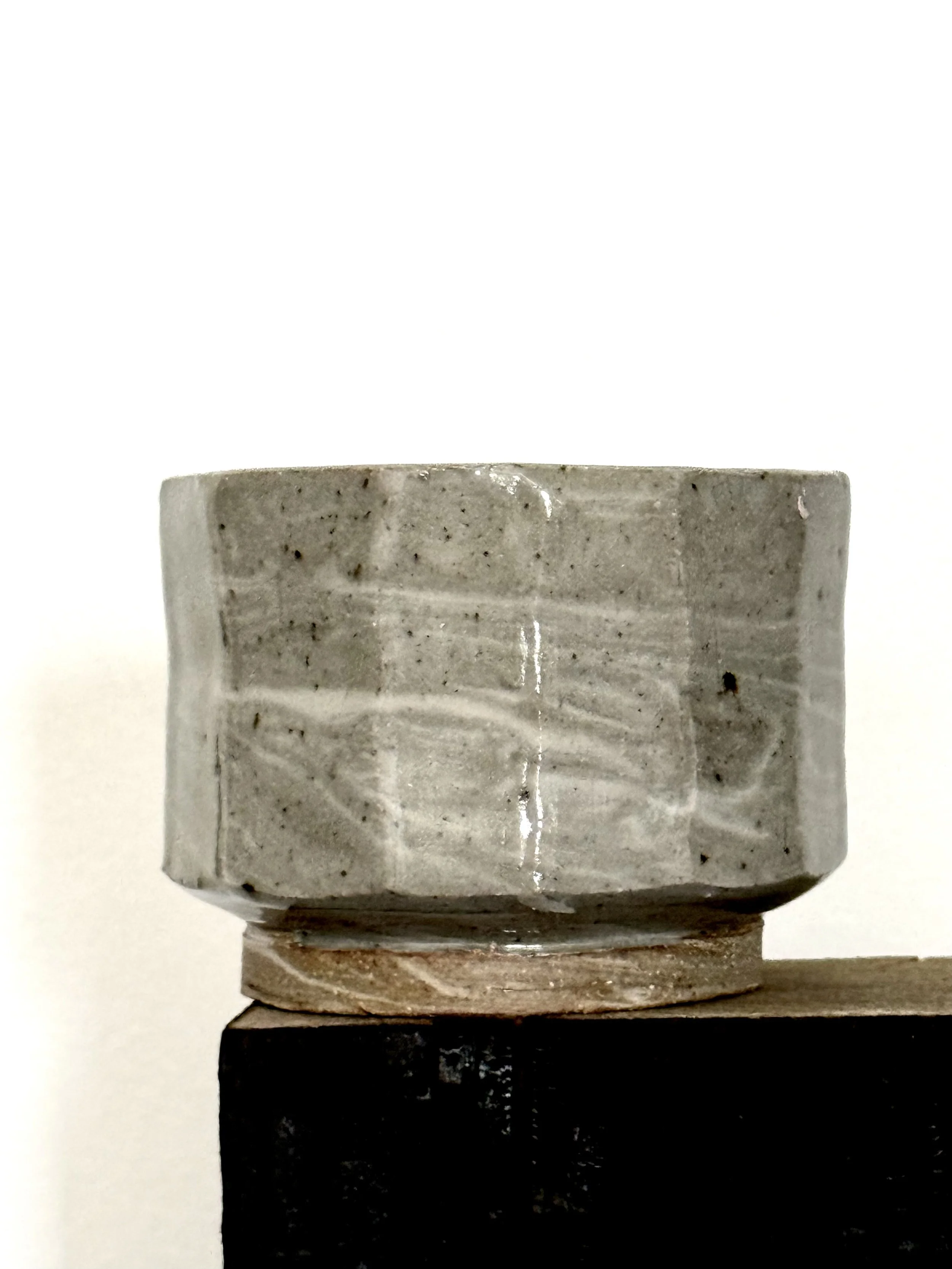
A small, geometrically faceted cup thrown and carved into flat planes, finished in a pale grey transparent glaze that pools thinner over the ridges and settles into soft striations across each facet. Speckled iron flecks break through the surface throughout, and the glaze thins to a raw, unglazed footring at the base — a quiet, understated piece that leans into subtle surface variation rather than dramatic breaks.
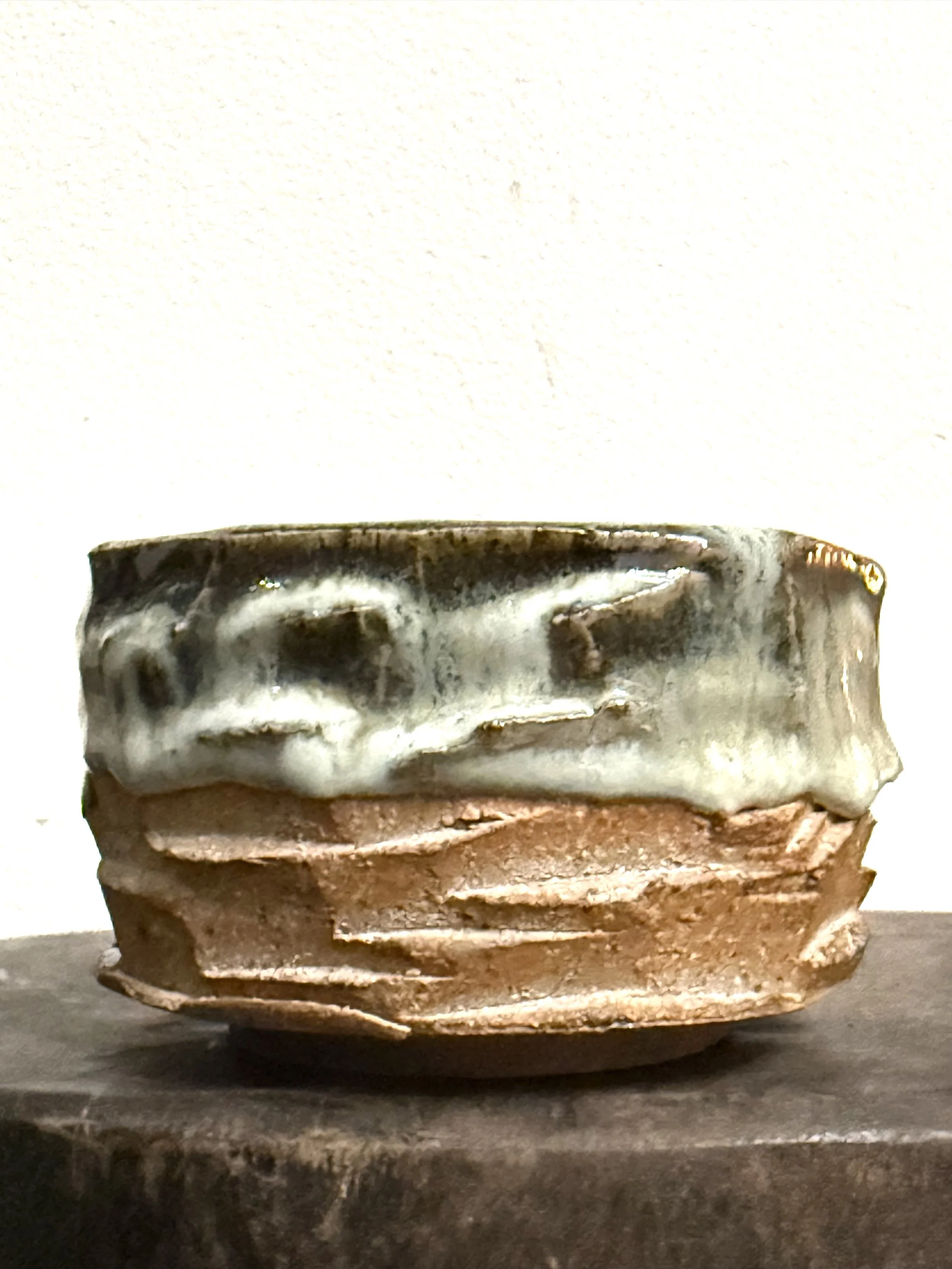
A carved, faceted stoneware bowl finished in a deep iron-brown glaze left bare on the lower body to expose a textured. A pale ash-toned glaze pools thick at the rim and runs down in long, individual drips that stop cleanly at the facet edges, each ending in a rounded bead — a controlled drip effect that owes as much to gravity as to timing in the firing. The interior shows a softer, more even break, pooling into a dark, moss-like cluster at the center where glaze thickness concentrates, consistent with your cone 10 reduction results.
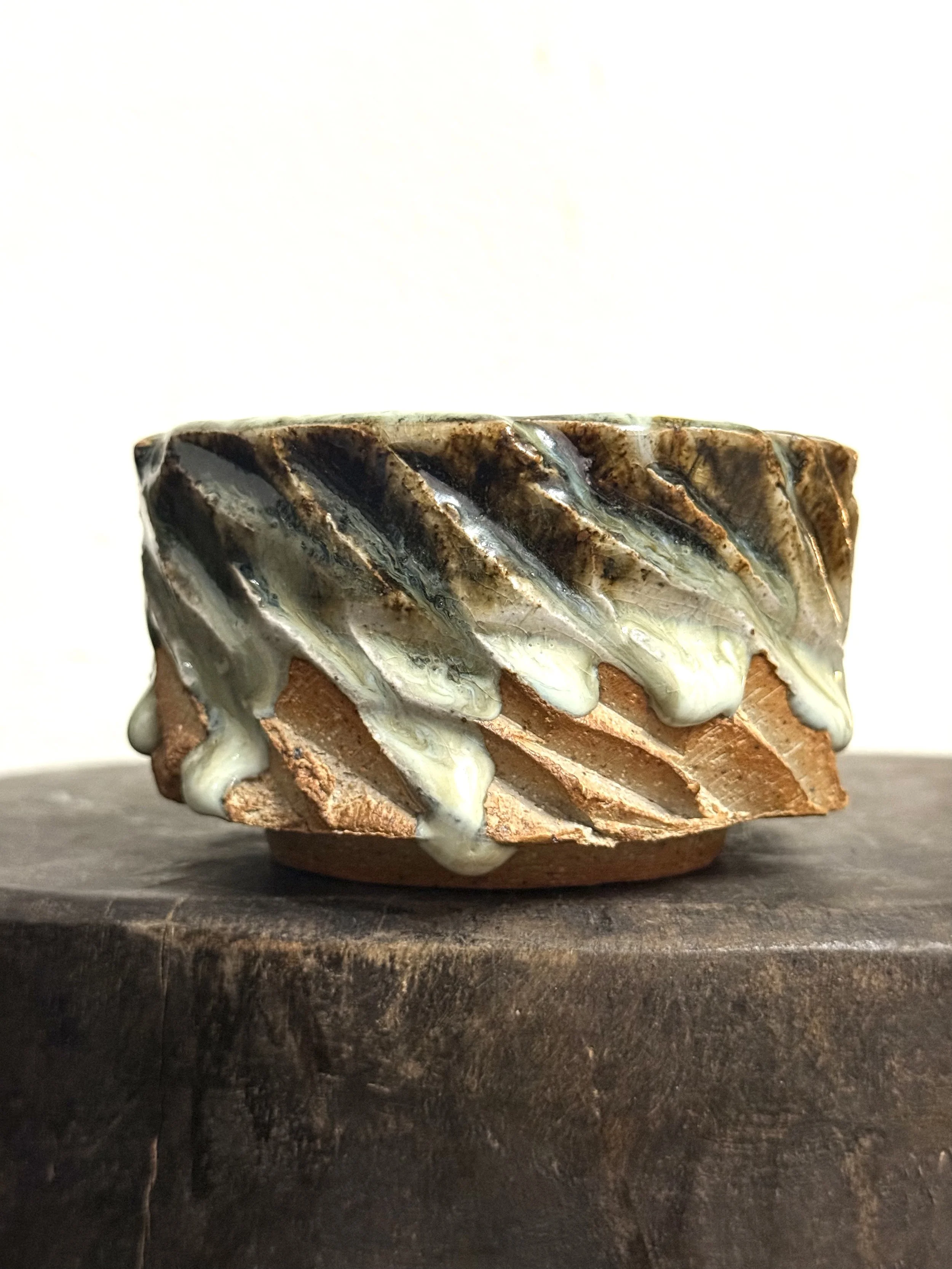
A carved, faceted stoneware bowl finished in a deep iron-brown glaze left bare on the lower body to expose a textured. A pale ash-toned glaze pools thick at the rim and runs down in long, individual drips that stop cleanly at the facet edges, each ending in a rounded bead — a controlled drip effect that owes as much to gravity as to timing in the firing. The interior shows a softer, more even break, pooling into a dark, moss-like cluster at the center where glaze thickness concentrates, consistent with your cone 10 reduction results.